%20(3).png)
Calling capacity
Users are not concurrent calls: how to plan calling capacity
Separate users, numbers, minutes and concurrent capacity, with a worked example showing why a line can be busy while agents are available.
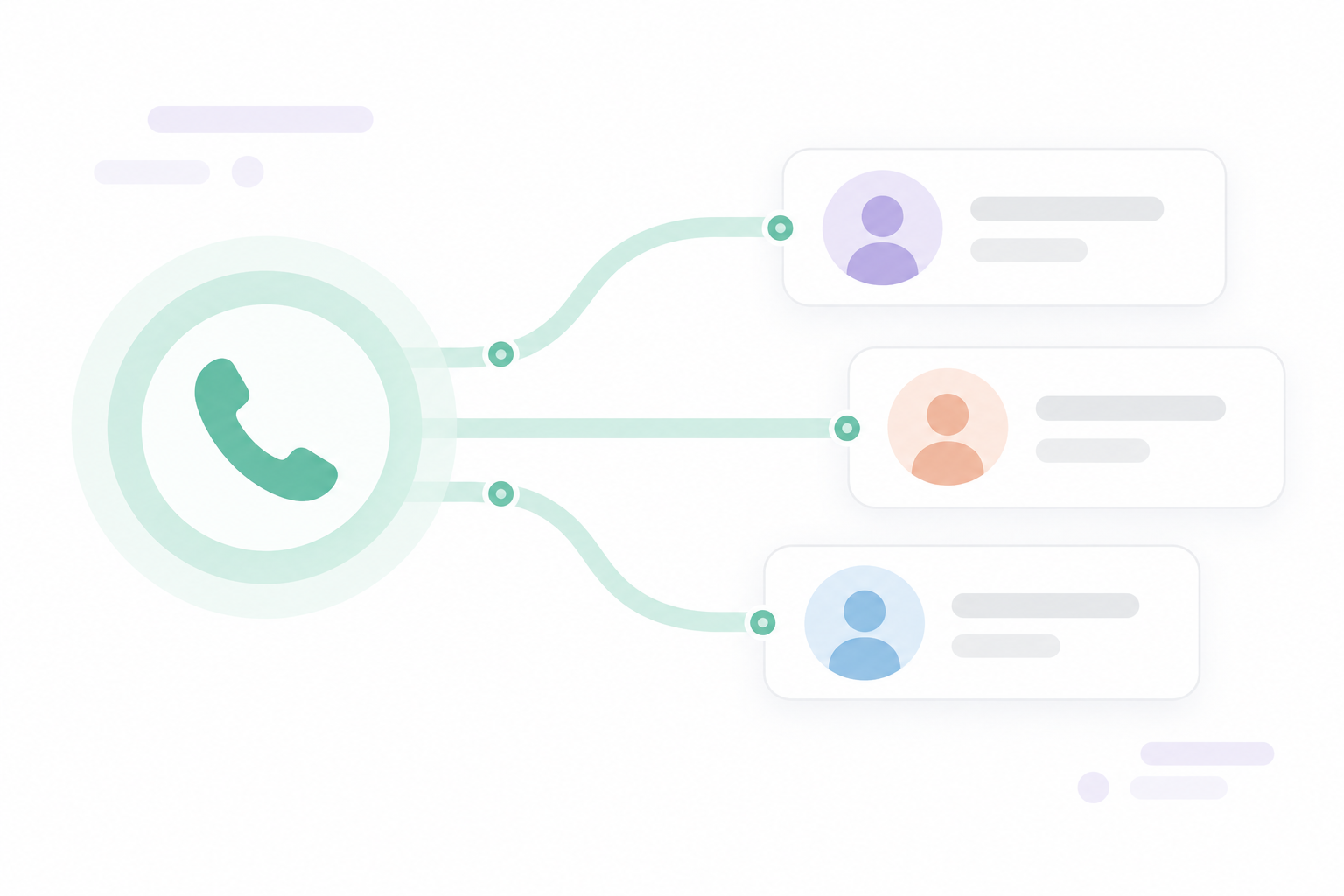
“We have eight agents, so we need eight concurrent calls.” That sounds reasonable, but it skips the important question: what overlaps during the busiest moment? Some staff are handling messages, some callers are waiting, and outbound calls may begin while incoming calls are still active.
Capacity planning starts by measuring that overlap. The figures below are teaching examples, not a UCaaS package specification or a ready-made purchasing recommendation.
Four numbers answer four different questions
- Users: who needs an account and permission to work in the platform?
- Phone numbers: which numbers can customers use to reach the business?
- Minutes: how much calling time accumulates over the reporting period?
- Concurrent calls: how many calls can be handled simultaneously within the agreed limits?
One phone number can support several simultaneous calls depending on the service. More numbers do not automatically mean more capacity. The distinction between SIP lines and trunks explains that a channel handles one call at a time and that provider and infrastructure limits affect capacity.
Why can a line be busy while an agent is free?
Imagine eight users and an illustrative limit of five simultaneous external sessions. At 10:05, three incoming calls have been answered, one outbound call is active, and a fifth caller is in the IVR. If the provider counts the IVR session towards the limit, all five sessions are occupied although only four agents are talking.
What a sixth caller hears depends on the provider and routing configuration: the call might be rejected or follow an alternative route. Do not promise that it will join a queue until you have checked whether queueing is available in that configuration. Also ask how transfers to external numbers are counted; they can involve more than one call leg depending on implementation.
This does not mean five sessions are inadequate for every eight-person team. They may be enough when actual overlap is low. Conversely, adding more user accounts alone will not remove a calling bottleneck when peaks are much higher.
Monthly minutes do not describe the peak
Compare two hypothetical days with 120 calling minutes. On the first, twelve ten-minute calls occur one after another throughout the day. On the second, six calls occur together for twenty minutes. The total duration is identical; simultaneous demand is one call in the first example and six in the second.
Do not infer concurrency from the minutes bill alone. Place start and end times on a timeline and count overlapping calls. If your records exclude queue or IVR time, ask the provider for session records before treating the result as a complete measure of capacity consumption.
Where does CPS fit?
Calls per second (CPS) concerns the rate at which new calls are started. Concurrency concerns calls that remain active together. The scale and limits documentation distinguishes these measures. A burst of new calls can encounter a rate limit before reaching the concurrent-call limit, so ask about both separately.
A measurement sheet before changing the subscription
- Select a representative period. Include ordinary activity and a known campaign or seasonal peak, rather than only a quiet day.
- Align timestamps. Check the time zone and session start and end definitions before combining branch records.
- Separate failure reasons. Distinguish exhausted capacity, an unanswered call, an invalid number and a technical failure.
- Inspect the peak. When did it happen, how long did it last, and was the traffic inbound, outbound or both?
- Test the limit behaviour. What does a caller hear when the limit is reached, and who reviews unanswered cases?
In UCaaS, begin with available call logs and exports, then reconcile them with the provider's capacity information. Do not assume a user name equals one calling session, or that every report includes every stage of a call in the same form.
A better capacity conversation
Instead of asking only “How many users should we add?”, bring a specific description: “These calls overlap at busy times, this failure appears, and we need to understand the session limit and routing at that limit.” Ask how incoming, outgoing, queued and transferred calls are counted. Then agree appropriate headroom and a post-change check. Your decision will be tied to observed work and can be revisited as that work changes.